UN-LOST
KUWAIT

what remains someone remembers an image survives what was here?

UN-LOST
KUWAIT

An archive of how Kuwait has been seen, remembered, and retold.

صور الكويت، مثل ما نتذكرها Browse the archive

THE ARCHIVE

Photographs and the memories attached to them.

Certainty
Place
Subject
Source
12 records
Lost image

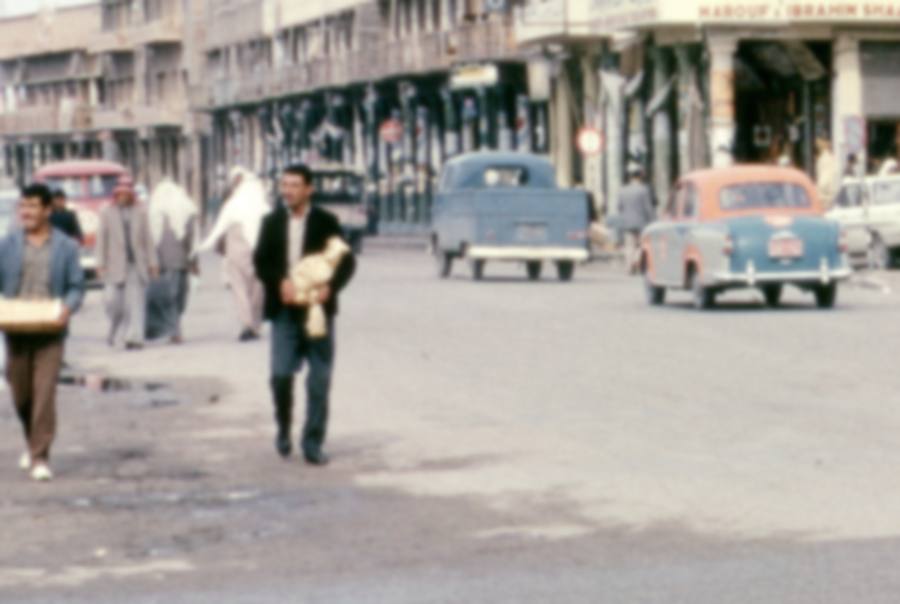
LOST IMAGE 001

Every two weeks one unidentified photograph is published here, on Instagram and in the newsletter. When it is identified, the record keeps both states: what we didn't know, and who told us.

Unidentified street detail, Kuwait, date unknown

Do you recognise this street?

Photographer
Unknown
Date
Kuwait, approximately 1958—1966
Location
Unidentified
Source
Family collection, carried out of Kuwait in the 1960s
We think
The building on the left may still stand. We are not sure.
If you know the street, the shop, or anyone in the frame — tell us. You do not need to be certain.

How this resolves. Two weeks later the same number returns as UN-LOST 001, naming everyone who contributed to the identification — including the people who turned out to be wrong. The disagreement stays on the record.

ULK—0001 · Kuwait · 1965

A PHOTOGRAPH SENT HOME.

A Palestinian family living in Kuwait, 1965

They were living in Kuwait. The photograph was meant for people who were not.

In 1965, Mansour Hasan's family posed for a photograph in Kuwait. According to the Palestinian Museum Digital Archive, the portrait was sent for Eid al-Fitr to relatives in Jenin.

The image is ordinary in the way family photographs often are: people gather, look toward the camera, and preserve themselves for somebody else. But its destination changes the photograph. It is also a message carried between two homes.

What the archive records is where the photograph was made and where it was sent. What it cannot tell us is what it felt like to receive it.

What photographs did your family send home?
Source: “A Palestinian family living in Kuwait,” Afaf Za'rour Collection, Palestinian Museum Digital Archive.
ULK—0002 · Salmiya · 1960s

BEFORE THE BEACH BECAME A MEMORY.

Children of the al-Khatib family at Salmiya beach

Nothing monumental is happening here. That is exactly why the photograph matters.

Children from the al-Khatib family stand on Salmiya beach during the 1960s. The shoreline is not presented as heritage. It is simply where the family went.

Decades later, the photograph holds details that may have felt too ordinary to record: how close the water was, what children wore to the beach, who stood beside whom, and the scale of a city that had not yet become the one remembered today.

A childhood photograph becomes historical without changing at all. The world around it changes instead.

Where did you swim when you were a child?
Source: “Members of al-Khatib Family on the Beach,” Na'ima Khatib Collection, Palestinian Museum Digital Archive.
ULK—0003 · Kuwait · early 1960s

THE KUWAIT THEY TOOK WITH THEM.

Kuwait street scene from Brett Jordan family archive

Sometimes Kuwait's photographs survive because somebody carried them somewhere else.

Brett Jordan digitized 292 slides taken by his English parents while they lived and worked in Kuwait around the early 1960s. His father was an air-conditioning engineer. Jordan was born in Kuwait, and the family later returned to the United Kingdom.

The photographs went with them. For decades, a record of streets, homes, friendships and everyday life in Kuwait existed inside a private family collection outside the country it depicted.

When Jordan scanned the slides and placed them online, a private archive became public again. Kuwait returned through images that had spent much of their lives elsewhere.

Is part of your family's Kuwait sitting in a box somewhere else?
Source: Brett Jordan, “Kuwait, early 1960s,” Flickr family archive. Individual image rights should be checked before final publication.

ADD YOUR IMAGE.

You don't need to know the exact year, photographer, street, or full story. Send what you have. Someone else may know the rest.

About

YOU KEEP IT.

Sending us a photograph does not give us your photograph.

UN-LOST Kuwait is an independent archive. It collects photographs of Kuwait together with what people remember about them — family albums, found photographs, images carried out of the country decades ago, and images nobody can identify at all.

It does not claim the past was better. It claims the past was more complicated than the images that survived it.

Is this you, or your family? If a photograph here shows you or someone in your family and you would rather it wasn't published, write to us and it comes down. You don't have to explain why.

CONTACT_EMAIL

Ownership

You keep it, permanently. You are giving a non-exclusive licence to show the photograph in the ways you ticked — nothing more. You can still use, sell, publish or give away your own photograph exactly as before.

Credit

However you asked: full name, first name only, or anonymous. We also record who took the photograph, where it came from, and what is still unknown about it.

Being contacted

If you allowed it, someone who recognises your photograph can send you a message through UN-LOST. We forward it. You decide whether to answer. We never show your email or phone number, and you can close that channel at any time.

The book, and anything printed

Always asked for separately, in writing, at the time. Ticking a box today does not put your photograph in a book.

Photographer unknown

Many photographs here have no traceable author. We publish them marked as such and take them down on request, immediately. If one of them is yours, tell us — we would rather credit you than keep the gap.

Changing your mind

Write to us and it comes down. No explanation needed, no negotiation.

ULK—0000

What we know

    What we don't know

      The record so far

      UN-LOST never shows a contributor's email or phone number. A message is relayed; the contributor decides whether to answer, and can close the channel at any time.